Free shipping worldwide
Easy returns within 30 days
Rated ⭐4.8/5 by our clients
Free shipping worldwide
Easy returns within 30 days
Rated ⭐4.8/5 by our clients
A dress over jeans outfit works best when the dress has enough room to fall over the denim without catching at the hips. Start with a simple waistband, then choose either a short loose dress, a longer split hem or a button-through shirt dress worn open. Keep the jeans visible as a deliberate part of the outfit.
Before thinking about shoes or accessories, look where the clothes touch: the jeans button, front pockets, hips and the dress hem. A tight dress over bulky denim can show ridges or ride upward. A very long closed dress can hide almost all of the jeans, leaving an extra layer that adds bulk without contributing much visually.
Try the combination without a belt first. Sit down and walk a few steps. If you keep pulling the dress down, the pairing needs more room or a different opening; adding accessories will not solve that.
Choose a dress that falls away from the hips and jeans with a reasonably smooth upper section. The shorter hem leaves a clear section of denim visible. Keep the shoes simple: trainers, flats or compact boots can work depending on the jean hem.
This is a useful starting point if you want the dress to remain the main piece. Avoid assuming a fitted mini dress will behave like a loose tunic. The fit at the hips matters more than the garment’s name.
A front or side opening can let the denim show while giving the dress more room to move. Check that the opening sits where you want it when you stand, sit and walk. There is no need to cut a dress to try the idea; start with one that already has the shape you need.
Keep the jeans relatively simple so the opening does not reveal a second set of heavy details. Large cargo pockets, a thick belt and prominent hardware can interrupt the fall of the dress.
A fully button-through shirt dress can act as a long outer layer over a tee and jeans. Wear it open, or fasten only enough buttons to create the outline you want while leaving room to move. This is a good way to experiment with looser denim because the dress does not have to stretch across the waistband.
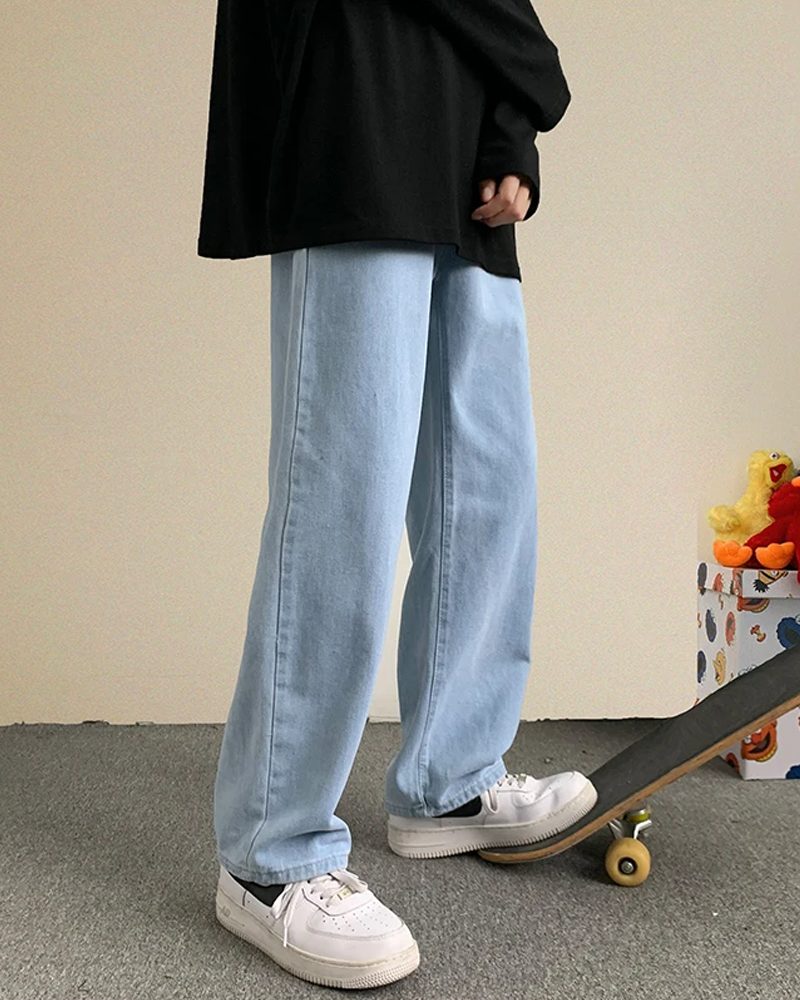
Our Light Blue Loose Jeans have a mid-rise waist and a loose leg. They are best suited to this more open, relaxed interpretation, rather than being forced beneath a tight dress. Try them with a plain white tee and an open dark shirt dress you already own. The featured product photo shows the jeans themselves, not a complete dress-over-jeans outfit.
If the dress is very full, start with straighter jeans. If the jeans are loose, keep the dress open or choose a less voluminous upper shape. This is a practical starting point, not a body-type rule: you can wear more volume overall if the layers still fall cleanly and feel comfortable.
For the light blue jeans, a dark open layer creates an obvious colour separation. A pale dress with pale denim gives a softer effect; add a clearly different shoe colour if you want the hemline to be easier to see.
| Problem | Try first |
|---|---|
| The dress catches at the waistband | Remove the belt, empty the pockets or choose a roomier dress |
| The jeans barely show | Try a shorter dress or an existing open-front style |
| The bottom half feels crowded | Simplify the shoes and use one clearer hem break |
| The outfit feels heavy | Remove an extra outer layer before adding more accessories |
Compare the jeans’ waist, hip and length measurements with a pair you like, and test the dress over them before committing to the combination. If you are exploring the opposite layering direction, our slip dress over a T-shirt guide focuses on smooth layers at the shoulders and neckline.
Try the open shirt-dress version with clothes you own first. The light blue jeans are an option if you want a relaxed denim base for that look and for ordinary tee-and-jeans days.

Free shipping worldwide with no minimum purchase.

Transactions encrypted and secured by a SSL protocol.

Not satisfied with your purchase? Return your order for free within 30 days.

Our after-sales service is there for you from Monday to Saturday.


