Free shipping worldwide
Easy returns within 30 days
Rated ⭐4.8/5 by our clients
Free shipping worldwide
Easy returns within 30 days
Rated ⭐4.8/5 by our clients
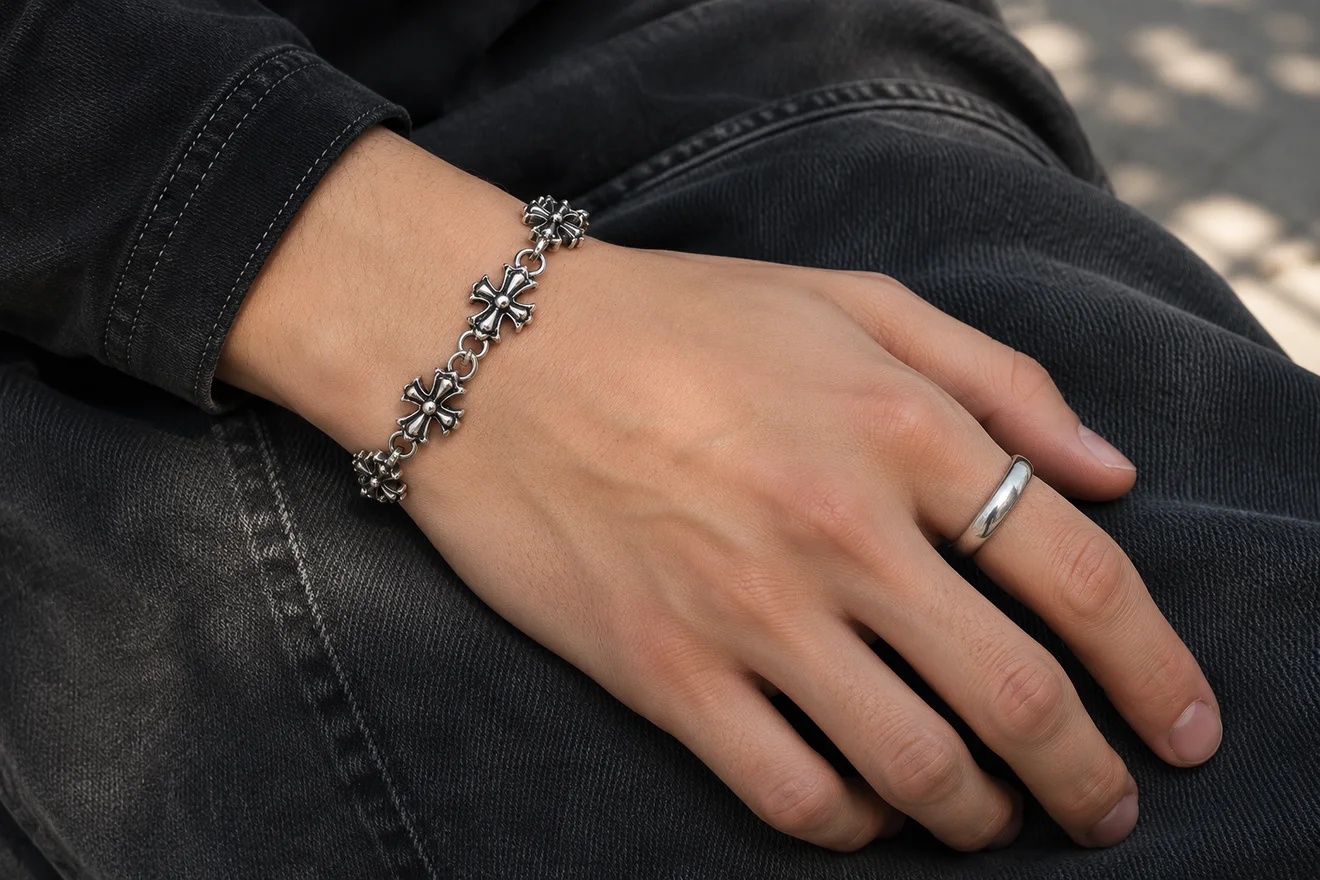
Wear one detailed bracelet with one plain ring and leave space around the wrist and the next finger before adding another piece.
Try the Gothic Cross Bracelet Men with a smooth silver-tone band. The bracelet is made up of linked cross shapes, so the ring can make a quieter line on the index or middle finger. Start with both on the same side and put that hand down on your lap. If the bracelet blends into the ring from a distance, try a wider gap between them or move the ring to the other hand. Look at how much of the bracelet shows when the sleeve is at its usual length.
If you prefer a large ring, switch the roles. Use a fine plain bracelet and put the visible detail at the finger. The two pieces can have the same finish and still look like separate shapes when one is much simpler. Try them on before using their size on a tray to decide. A bracelet shifts around the wrist while a ring stays in one spot, and the motion can change which piece stands out.

Test the combination with the sleeves you plan to wear. If a fitted cuff ends above the wrist, the bracelet can stay fully visible. A long wide sleeve may partly cover it. Roll that sleeve once or move the bracelet to the hand that shows more when you walk. Keep the cuff loose enough that it does not push the bracelet down toward your hand each time you bend your wrist.
With one bracelet on a bare wrist and rings on the same hand, check the gap in the mirror. A bracelet that hangs low can touch the base of the hand during a reach. If you are wearing a wide band on a nearby finger, grip a bag handle to see if both pieces still feel easy. Move the bracelet a little higher with its clasp if possible or choose which piece to keep on that side.

Matching finishes can connect pieces quickly. A darkened silver-tone bracelet beside a smooth light silver-tone ring may look different in brightness while still sharing a color family. Try a plain cuff or strong band on the other hand if you want to balance the shine. If you mix finishes, separate them deliberately. A warmer ring on the other hand can leave the bracelet’s links clear without putting both metals in the same cluster.
Bring your arms forward the way you would when you use a phone or pick up a drink. If two pieces seem to compete only when your hands come together, move one ring away from the bracelet side first. A plain ring plus one accent is often enough. If you want a third piece, compare a slim band a few fingers away with no third piece before you decide.

Button a cuff, carry a bag and turn your palm over. Make sure the links stay comfortable and the ring does not pinch its neighboring finger. Check again with your arms at rest. Keep the arrangement when you can see the detail you chose and both pieces feel easy during ordinary movement.

Free shipping worldwide with no minimum purchase.

Transactions encrypted and secured by a SSL protocol.

Not satisfied with your purchase? Return your order for free within 30 days.

Our after-sales service is there for you from Monday to Saturday.


