Free shipping worldwide
Easy returns within 30 days
Rated ⭐4.8/5 by our clients
Free shipping worldwide
Easy returns within 30 days
Rated ⭐4.8/5 by our clients
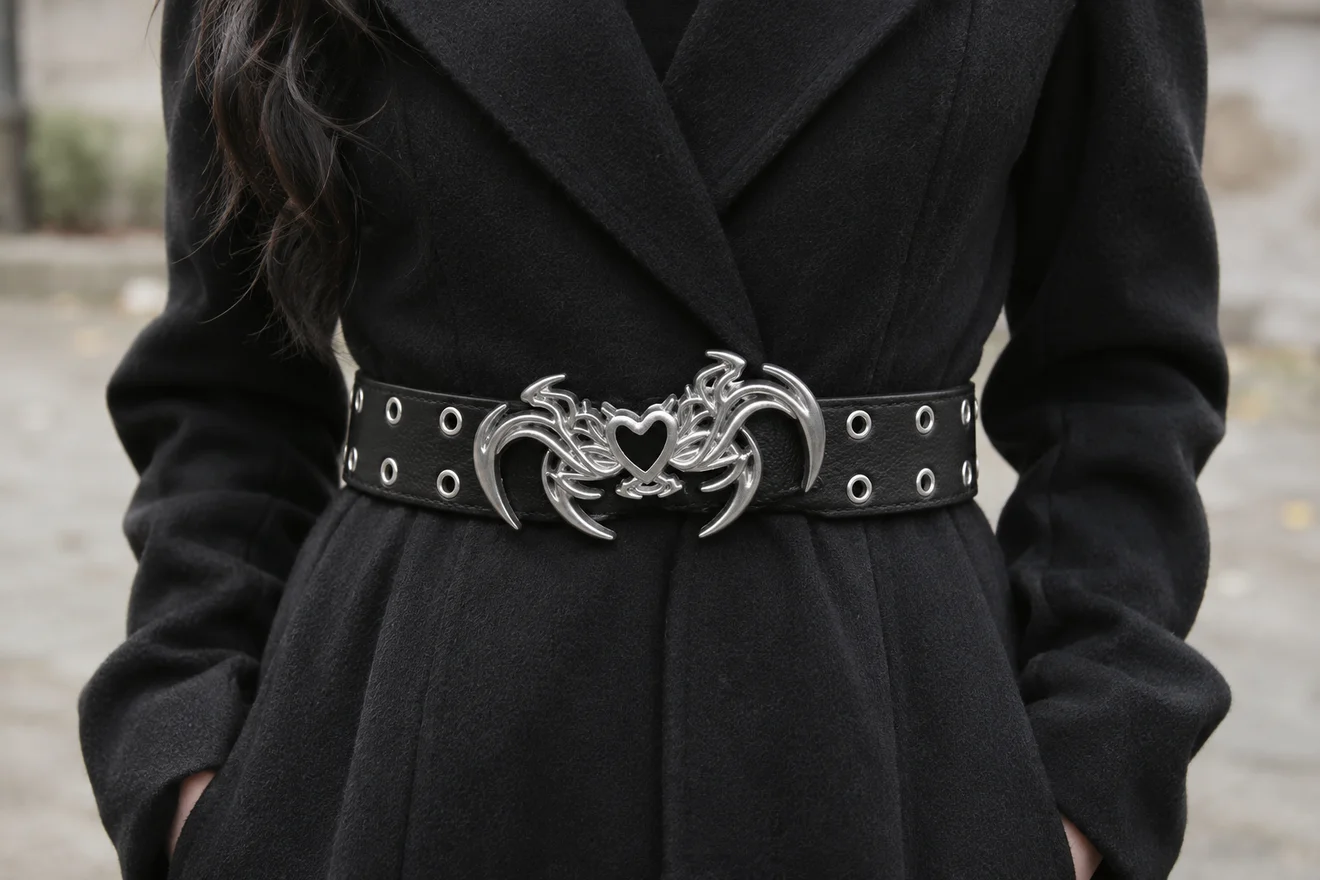
Close your coat, wrap a belt over it at your natural waist, and fasten it loosely enough that the lapels and lower front still hang straight.
Try a medium-weight coat that you can move in before adding a belt. The Black Gothic Belt has two rows of metal eyelets and a sculpted silver-tone gothic buckle. It has a 4.9/5 rating across ten customer reviews. Start with it over a dark wool coat so the metal shows and the strap follows the shape of the coat. Measure the outside of the closed coat where you intend to belt it if you are choosing a size. The sweater underneath and the coat’s thickness both affect how much length you need.
Lay the strap at the waist and look for a position below the lapels and above the fullest part of the coat pockets. If the belt covers a large button or presses its edge into you, move the strap slightly higher or lower. Let the coat settle before fastening it. A belt can sit over a coat without loops if the strap stays level when you move and the coat can close normally.

Stand with your arms down and look at the coat’s lower front edges. A belt that pulls the fabric too tightly can make the coat flare below it or bunch behind it. Fasten the belt one position looser and smooth the fabric at both sides. Check whether the front hangs into the same line again. If an overlying belt always pushes out the coat, use a softer strap or the coat’s own belt when it has one.
Sit down before settling on the position. A wide buckle may touch a button or shift upward into your ribs. Move the belt a little lower or leave more slack if that helps the coat bend. If the belt repeatedly moves toward the narrowest point anyway, choose that spot and test it again with the coat fastened. Avoid using a tight strap to keep heavy fabric in place.

Center the buckle when the coat has symmetrical lapels and a plain button line. With an asymmetric coat, compare a slightly off-center buckle and look at both front panels. Move it back toward the middle if a raised edge sits directly under the buckle. Keep the tip flat with the belt’s keeper if it has one, and check that the end does not fall across a pocket opening.
Try the shoulder or crossbody bag you carry most often. The strap can cross the coat belt or bump into the buckle when you lean forward. Move the bag to one shoulder or adjust its length when the two pieces keep hitting. With a coat that already has a prominent zipper or shiny buttons, choose one area of hardware to show clearly.

Put your hands in your pockets, reach forward and sit once. The coat should close and move comfortably with the belt on. If a lapel pulls inward, flatten the coat and choose a looser position. If the belt slides or catches on a bag after you adjust it, try a lighter strap or use the coat’s own tie.

Free shipping worldwide with no minimum purchase.

Transactions encrypted and secured by a SSL protocol.

Not satisfied with your purchase? Return your order for free within 30 days.

Our after-sales service is there for you from Monday to Saturday.


