Free shipping worldwide
Easy returns within 30 days
Rated ⭐4.8/5 by our clients
Free shipping worldwide
Easy returns within 30 days
Rated ⭐4.8/5 by our clients
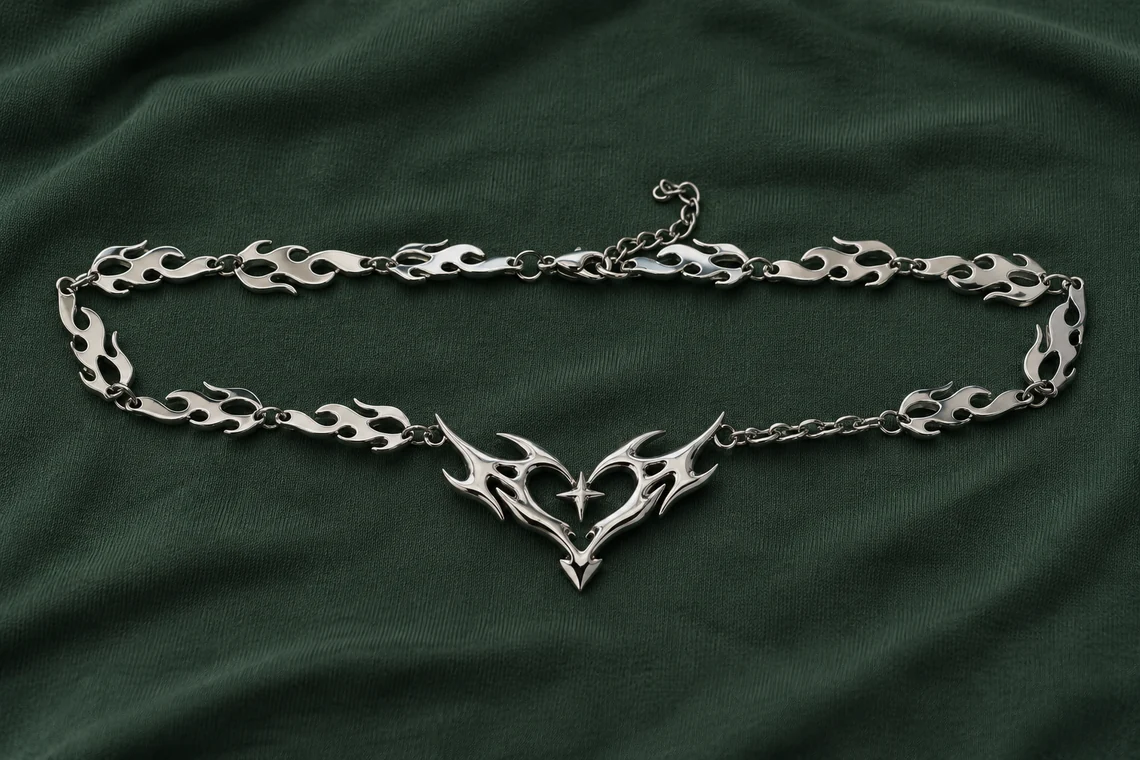
Center the necklace, straighten both sides of the chain and turn your head once to see whether the clasp moves forward or the pendant flips in place.
Look straight into a mirror and center the front detail using the neckline or center seam of your top. The Flame Heart Necklace has a silver-tone flame-shaped centerpiece joined to the chain on both sides. It has a 5/5 average from 3 customer reviews. That construction makes it easy to see whether the whole necklace has moved or whether a detail in the middle has tilted. Try the same check on the necklace you are wearing, then use your fingertips to make sure both sides of the chain lie flat.

Turn your head to the left and right without touching the chain. Check where the clasp is afterward. If it appears near the shoulder while the front decoration is still facing out, the full necklace has moved around your neck. If the clasp stays back but a removable charm turns, look at how the charm sits on its loop. Start with the part that changed so you can tell which adjustment helps.
Take off the extra necklace, scarf or bag you were wearing and redo the head turn. If the movement stops, put one item back at a time. Check a shirt collar before trying on different jewelry. A collar edge can catch the chain as you look down. Try wearing the front detail a little higher or lower if the necklace has an intended setting that moves it away from the edge.

If you wear two necklaces, try a clear difference in their hanging lengths. Watch how the shorter one falls when you lean forward. If the chains touch along most of their path, let one hang lower on its own extension or wear it separately. Do the same experiment with loose hair tied back once if hair catches near the clasp, then reset the chain and check it with your usual hairstyle.
Unfasten the necklace and hold it where you can see both ends. Straighten any loose twists and check that the clasp closes fully on its intended ring. When there is an extender, see whether its tail sits smoothly in the back at another comfortable setting. Fasten it without twisting the chain. Check where the weight of the front and the back sit once you let go.

If a charm flips even with a single straight chain, check that the loop gives it room to settle and that its front is already facing out when you put it on. A removable pendant may sit differently on a compatible chain, especially if its loop catches on a thick link. Leave changes to fixed hardware or bent links to a jeweler who can inspect them in person.
Turn your head, reach for your bag and look down as you normally do. Observe whether the clasp or the front moves first. Use the chain on its own for another try if the result is hard to read. Once the necklace sits comfortably through those movements, add the other pieces back one at a time.

Free shipping worldwide with no minimum purchase.

Transactions encrypted and secured by a SSL protocol.

Not satisfied with your purchase? Return your order for free within 30 days.

Our after-sales service is there for you from Monday to Saturday.


