Free shipping worldwide
Easy returns within 30 days
Rated ⭐4.8/5 by our clients
Free shipping worldwide
Easy returns within 30 days
Rated ⭐4.8/5 by our clients
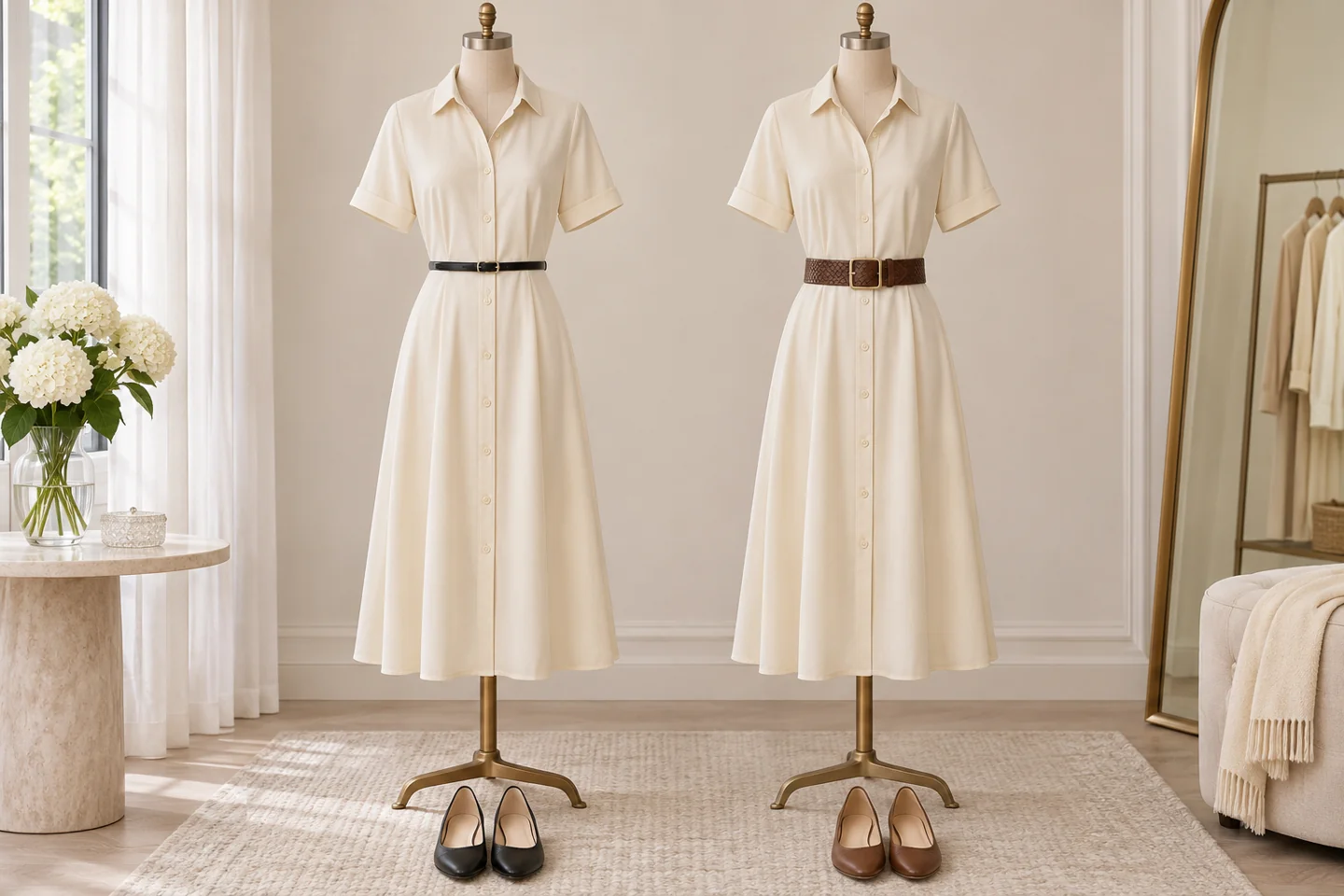
To wear a belt with a dress, place it where the dress can gather comfortably, fasten it without squeezing, and smooth the fabric above and below it. Start with a narrow belt on fine fabric or a more substantial belt on a structured dress. Check the result while seated as well as standing.
A belt can define a loose shape, break up one large area of colour or add a small decorative detail. If the dress already has a fitted waist, a gathered seam or an important print at that point, it may work better without a belt.
Hold a belt against the dress before threading or fastening anything. Move it slightly higher and lower, then choose the position that feels comfortable and supports the dress’s design. There is no single placement that every body or dress needs.
| Dress type | Starting option | What to check |
|---|---|---|
| Fine or draped fabric | Narrow, simple belt | No catching, dragging or excessive gathering. |
| Shirt dress | Narrow to medium belt | Buttons stay flat and the collar remains balanced. |
| Loose knit dress | Softly fastened belt | The knit does not stretch or bunch uncomfortably. |
| Structured plain dress | A more substantial belt if desired | The belt does not fight an existing waist seam. |
Our thin black belt with a simple buckle is a restrained starting point for a plain dress. Use its black line to connect with dark shoes, or let it be the only dark accent. Check the listed length against the circumference where you intend to wear it, rather than assuming your jeans-belt size is right.

Put the belt on loosely first. Smooth the dress so any gathering is spread around the body instead of concentrated in a large fold at the front. If you want a slight bloused effect, gently lift a small amount of fabric above the belt and check that the hem stays even.
For a warmer, more decorative finish, our brown belt with a vintage-style patterned finish can work over a plain cream shirt dress or dark simple dress. Its product page lists PU leather. Keep the dress relatively quiet so the belt’s pattern is visible without competing with another busy print.
A dress does not need loops for a belt to work. The belt can rest where the dress gathers naturally, provided it stays comfortable and does not slide around. Sit, walk and raise your arms before deciding the fit is secure enough.
If it keeps slipping, try a different placement or a belt with a different shape rather than tightening it repeatedly. For a dress you plan to belt often, a tailor can advise on discreet loops appropriate to the fabric. Avoid improvised pins through delicate material.
For a more decorative Y2K approach, compare how to wear a chain belt. Start with a dress you already like, then use the belt only if it improves the outfit and remains comfortable.

Free shipping worldwide with no minimum purchase.

Transactions encrypted and secured by a SSL protocol.

Not satisfied with your purchase? Return your order for free within 30 days.

Our after-sales service is there for you from Monday to Saturday.


