Free shipping worldwide
Easy returns within 30 days
Rated ⭐4.8/5 by our clients
Free shipping worldwide
Easy returns within 30 days
Rated ⭐4.8/5 by our clients
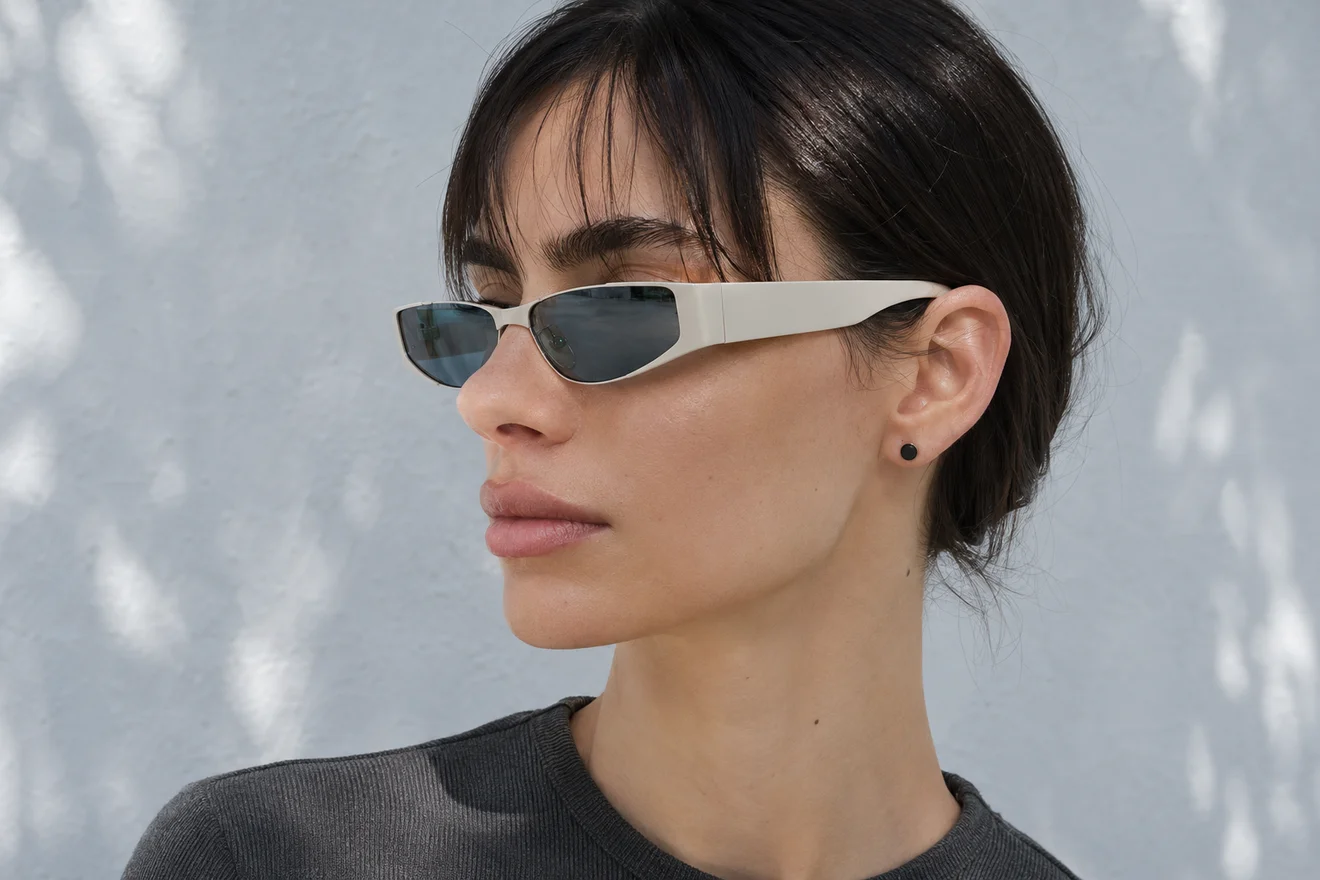
Measure the full front width of a pair of sunglasses that already fits, then use that number to compare new frames before choosing a lens shape.
Lay your current pair on a table and measure from the outside edge of one hinge to the same point on the other side. Use the same measuring points on any other pair. The Narrow Rectangle Sunglasses give you a shallow rectangular lens to compare and have a 4.67/5 rating across three customer reviews. Their front shape offers less lens height than a tall frame, while the outside width still needs its own fit check.
If a listing shows three small numbers inside the temple, they usually describe lens width, bridge width and temple length. Check the seller’s measurement diagram for the full width. The metal or plastic outside the lenses can change how far the sides project. When that measurement is missing, compare the pair in person or ask for it before relying on a width label. Try on a frame you already own and note whether the edges sit visibly beyond the sides of your head.

Put the sunglasses on and look straight ahead. The bridge should feel stable in its usual spot and the arms should rest comfortably on both sides. If the front immediately slides down, compare a bridge shape or a pad position that sits more securely. If the arms spread outward as soon as you put the pair on, try a wider frame or a shape with a different hinge position.
Look down and turn your head. A pair that sits very wide may look fine straight on and slide when you move. If the front fits and only the arms feel long, compare a pair with a shorter temple length or ask an optician whether that design can be adjusted. Put the glasses on without your usual hairstyle first if clips or a heavy section of hair make it hard to feel where the arms rest.

Smile, then look straight and to either side. A shallow frame can leave more room at the cheeks, which is useful if a tall lens moves when you smile. If a frame touches your cheeks, try a smaller lens height or a bridge that holds the frame a little higher. Check that you still see the shape from the side and that the top edge sits where you like it against your brows.
If you want a round or oversized look, compare two widths in the same style. A slightly smaller version can give you that shape without pushing the corners far out. Try the frame in the light and position you normally use outdoors, wearing your hat if you often wear one. Make sure the brim leaves room above the frame and the arms still sit in their usual place.

Walk a few steps, look down and then smile. The frames should remain steady and feel comfortable at the bridge and behind the ears. If you keep repositioning them, use the part that moves to guide the next comparison. Change the bridge shape, the overall width or the lens height one at a time.

Free shipping worldwide with no minimum purchase.

Transactions encrypted and secured by a SSL protocol.

Not satisfied with your purchase? Return your order for free within 30 days.

Our after-sales service is there for you from Monday to Saturday.


